

Tokyo
Ancient temples, neon streets, and more Michelin stars than anywhere on earth.
The city that makes everywhere else feel slightly ordinary
This Tokyo travel guide covers the largest city on earth — and somehow one of the most navigable. It has more Michelin-starred restaurants than Paris, a public transport system that runs to the second, and a 1,400-year-old temple that sits seven minutes by train from the world's busiest pedestrian crossing. The contrasts are not incidental — they are the point.
Whether you want cherry blossom season in Shinjuku Gyoen, standing ramen at midnight in Shibuya, a dawn visit to Senso-ji before the crowds arrive, or a weekend bullet train to Kyoto, Tokyo does not require much planning to be extraordinary. It just requires showing up.
Tokyo Travel Highlights
From century-old shrines to neon-drenched street food alleys
Senso-ji & Asakusa
Tokyo's oldest temple, founded in 628 AD, sits at the end of Nakamise-dori — a shopping street lined with traditional crafts and street food. Arrive at dawn before the tour groups, and Asakusa is a completely different experience: quiet, atmospheric, genuinely old.
Shibuya Crossing & Beyond
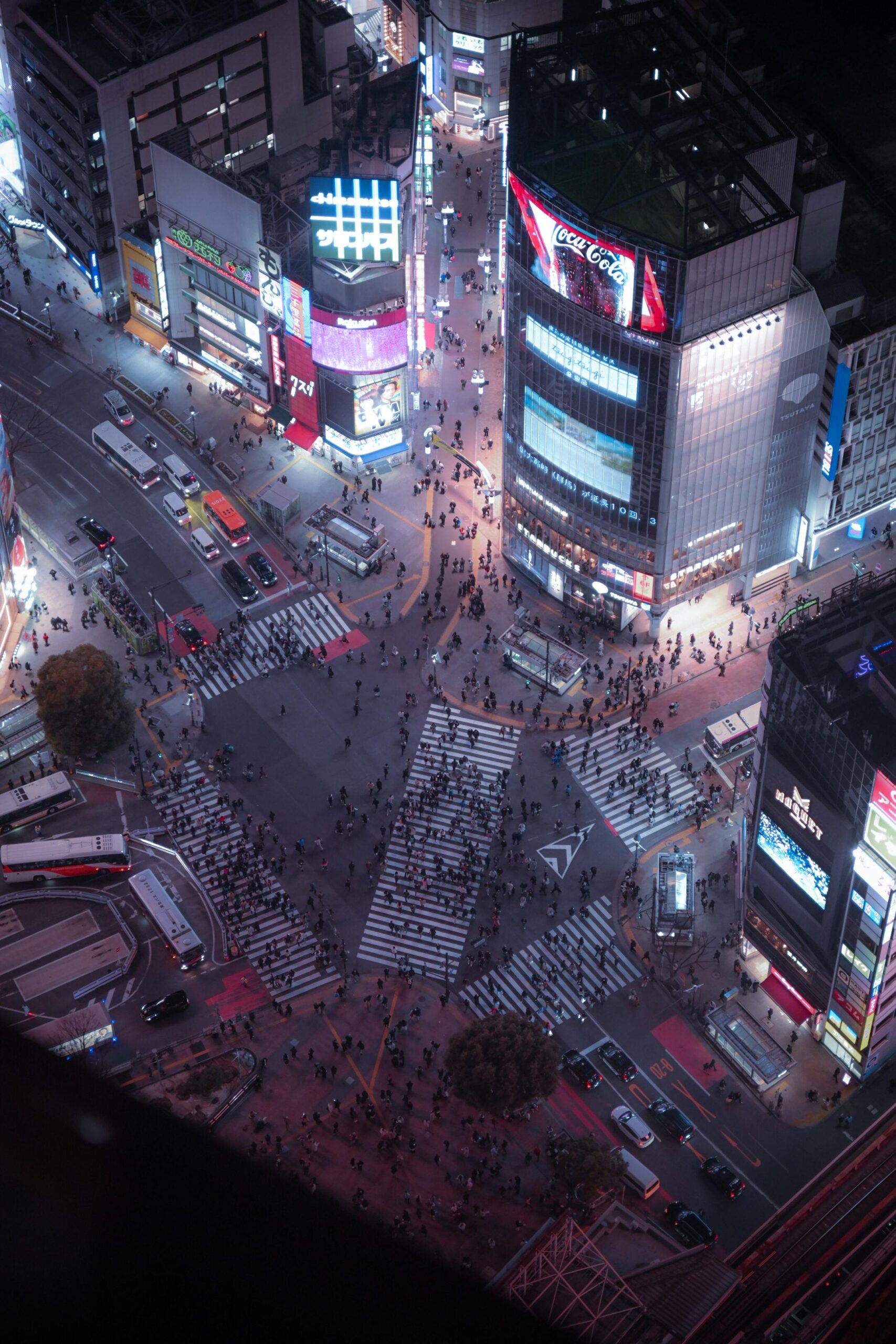
The Shibuya scramble crossing is the most photographed intersection on earth — up to 3,000 people crossing at once when the lights change. Spend the evening in Shibuya and it becomes clear why Tokyo at night is considered in a category of its own.
Shinjuku Gyoen in Cherry Blossom Season
1,100 cherry trees across 144 acres. In late March and early April the park closes early, fills completely, and becomes one of the more quietly astonishing things you can experience in Japan. Book accommodation months in advance if this is your reason for visiting.
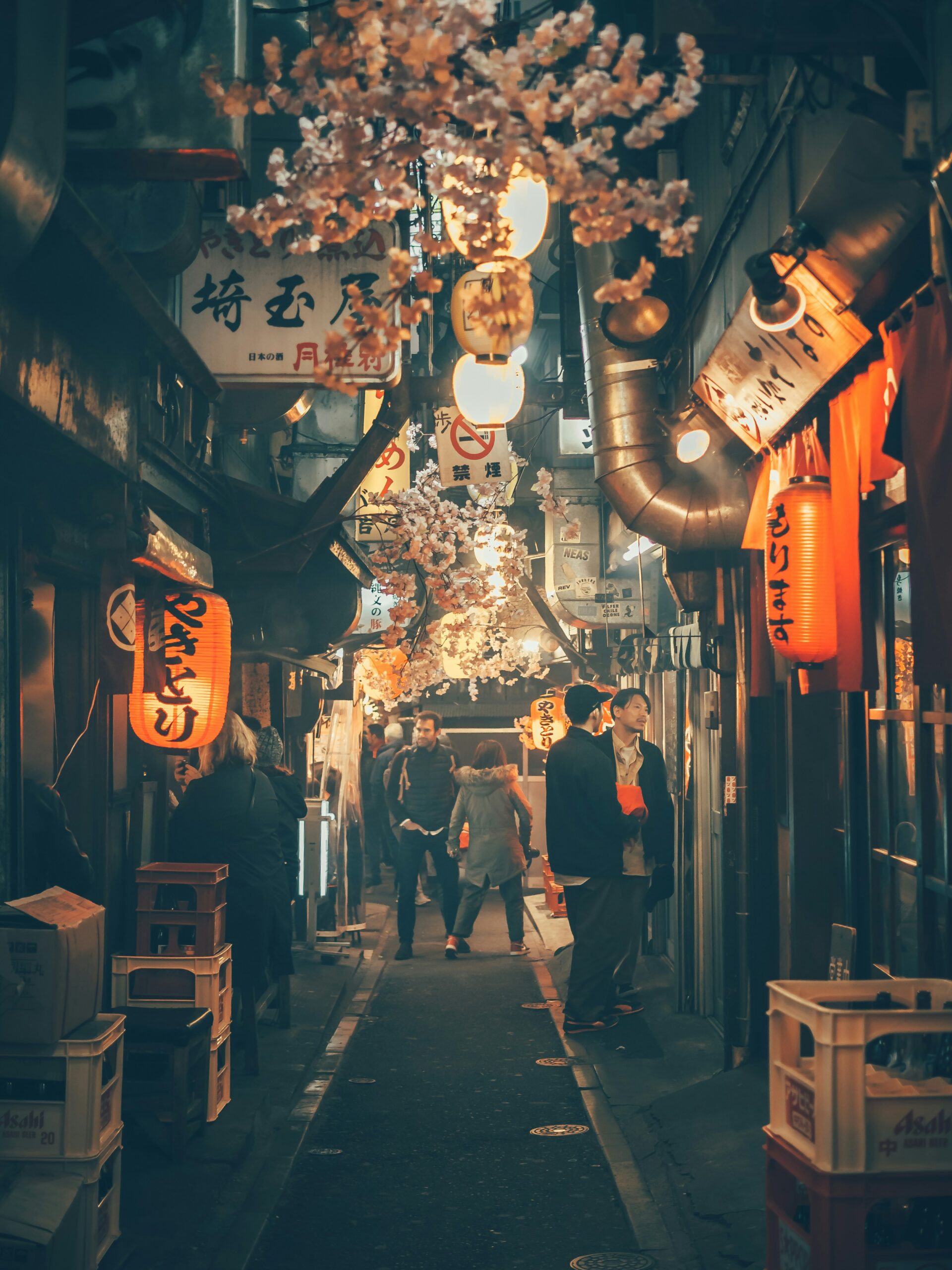
Shinjuku's Golden Gai & Omoide Yokocho
Golden Gai is a network of six alleyways with nearly 200 tiny bars, each holding between five and ten people. Omoide Yokocho — Memory Lane — is a narrow alley of yakitori stalls under lanterns. Both are best after 9pm on a weeknight.
Eating Tokyo
More Michelin stars than any city on earth, and the best meal you have may well cost £8 at a counter with six seats. Tsukiji outer market for breakfast, a ramen bar in Ikebukuro for lunch, yakitori in Yurakucho under the train tracks for dinner. None of it requires a reservation.
Tokyo Tower & Skytree Views
Tokyo Tower at night, seen from the surrounding streets, is one of those views that photographs perfectly and somehow still surprises you in person. Skytree at 634 metres gives you the full scale of the city — on clear days, Fuji is visible on the horizon.
Choose Your Version of the City
Tokyo is inexhaustible — the city you find depends entirely on where you look
The Food Lover
The highest concentration of Michelin stars on earth. From a standing soba counter to a twelve-seat omakase with a three-month waiting list. Every neighbourhood has its speciality and its best-kept secret. Tokyo rewards the eater more than any city in the world.
The Culture Seeker
Asakusa and Yanaka for old Tokyo, the Imperial Palace gardens, the Edo-Tokyo Museum, and the extraordinary collection at the Tokyo National Museum in Ueno. Plus day trips to Nikko, Kamakura, and Hakone within two hours by train.
The Explorer
Harajuku's Takeshita Street and Omotesando for fashion. Akihabara for electronics and anime culture. Shimokitazawa for vintage clothing and live music. Daikanyama for independent bookshops and coffee. Tokyo has more distinct neighbourhoods than most countries have cities.
Tokyo Is Easier Than It Looks
The Tokyo Metro is the most efficient public transport system in the world. Trains run every two to three minutes on most lines, announcements are in English and Japanese, and the network connects every neighbourhood worth visiting. Getting lost in Tokyo is genuinely difficult.
A Suica card — loaded at any station — covers every train, subway, and bus in the city and works as a contactless payment card at most convenience stores and vending machines. It takes about three minutes to set up and makes the entire trip considerably smoother.
Tokyo Travel Guide: Best Time to Visit
Four very distinct seasons — each one worth experiencing for different reasons.
| Season | Temperature | What to Expect | Verdict |
|---|---|---|---|
| Mar – May | 10–22°C | Cherry blossom season in late March and April transforms the city. Parks fill, light is extraordinary, and the atmosphere is unlike anything else. Book well in advance — this is Tokyo's most popular window by some distance. | Best Time |
| Oct – Nov | 12–22°C | Autumn foliage season, cooler temperatures, fewer crowds than spring. Arguably the best kept secret on the Tokyo calendar — golden and red leaves across every park and temple, perfect walking weather throughout. | Insider Pick |
| Jun – Aug | 25–35°C | Hot, humid, and festival season. Obon in mid-August is one of Japan's most significant cultural events. Demanding weather but a genuinely different side of the city — best suited to those who don't mind the heat. | Festival Season |
| Dec – Feb | 2–12°C | Cold but crisp and rarely wet. Christmas illuminations in Omotesando and Marunouchi are spectacular. The easiest time of year to get a restaurant reservation. Mount Fuji views are clearest in winter. | Winter Calm |
Ready to Plan Your Tokyo Trip?
Hotels, bullet train passes, restaurant reservations, and day trips to Kyoto, Nikko, and Hakone. Everything in this Tokyo travel guide is just the start — tell us what you want from the city and we'll put it together.
Plan My Tokyo Trip →